
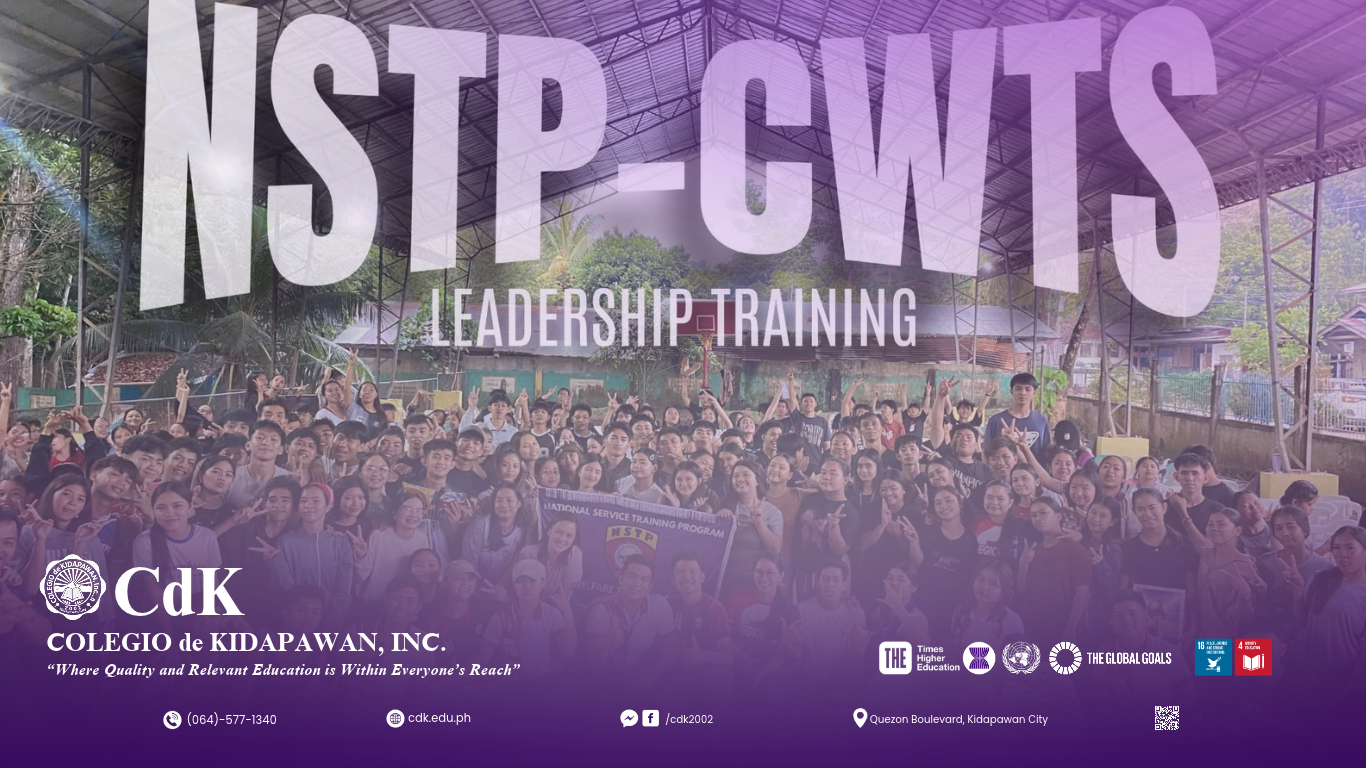
First-year students across departments develop communication and conflict-resolution skills in a leadership training that promotes quality education, peaceful dialogue, and inclusive decision-making.
First-year students from various departments of Colegio de Kidapawan (CdK) participated in the morning session of the National Service Training Program (NSTP) Leadership Training on October 3, 2026, at Singao Elementary School. Centered on the theme “Conflict Management and Conflict Resolution,” the session focused on helping students handle disagreements, communicate effectively, and make responsible decisions.
Through group activities and interactive exercises, participants practiced cooperation and explored constructive ways to resolve differences. The activities encouraged them to listen to one another, consider different perspectives, and work toward solutions that reflected the concerns of the group.
The training emphasized that effective leadership involves more than giving instructions or taking charge. It requires patience, respect, and the ability to keep communication open when opinions differ. By approaching disagreements as opportunities for discussion rather than division, students explored how leaders can build understanding and maintain productive working relationships.
Bringing together freshmen across departments also provided an opportunity to work beyond familiar classroom groups. Participants shared ideas and responsibilities, reinforcing the importance of cooperation within the wider school community.
The initiative aligned with SDG 4: Quality Education, particularly Target 4.7, which includes education that promotes a culture of peace, nonviolence, and responsible global citizenship. Its emphasis on communication, mutual respect, and peaceful conflict resolution connected practical leadership development with these educational aims.
The session also reflected SDG 16: Peace, Justice and Strong Institutions. Its focus on constructive dialogue and consideration of different viewpoints was particularly relevant to Target 16.7, which calls for responsive, inclusive, participatory, and representative decision-making. The training introduced practices consistent with this goal by encouraging students to listen, participate, and seek shared solutions.
Through the training, CdK freshmen explored how leadership takes shape in everyday interactions—from listening during a group discussion to responding respectfully when disagreements arise. The experience encouraged them to bring these practices into their academic work, student activities, and future community involvement.