
Ensure sustainable consumption and production patterns.
“Malinaw na tubig. Sariwang hangin. Luntiang kabundukan.” These are the things we imagine when we hear the word paradise. But what if paradise is no longer green? What if the mountains are covered not in trees, but in the things we have thrown away?
In Kara David’s documentary Ibinasurang Paraiso, we see a place where a mountain of garbage has become home. For the people living there, trash is not something they can walk away from. It is their child’s playground. Their everyday reality. Kilometers away, our lives continue as usual. We buy more than we need, then throw things away without asking: “Where does it go?”
What we call “waste” does not vanish. It becomes someone else’s reality.
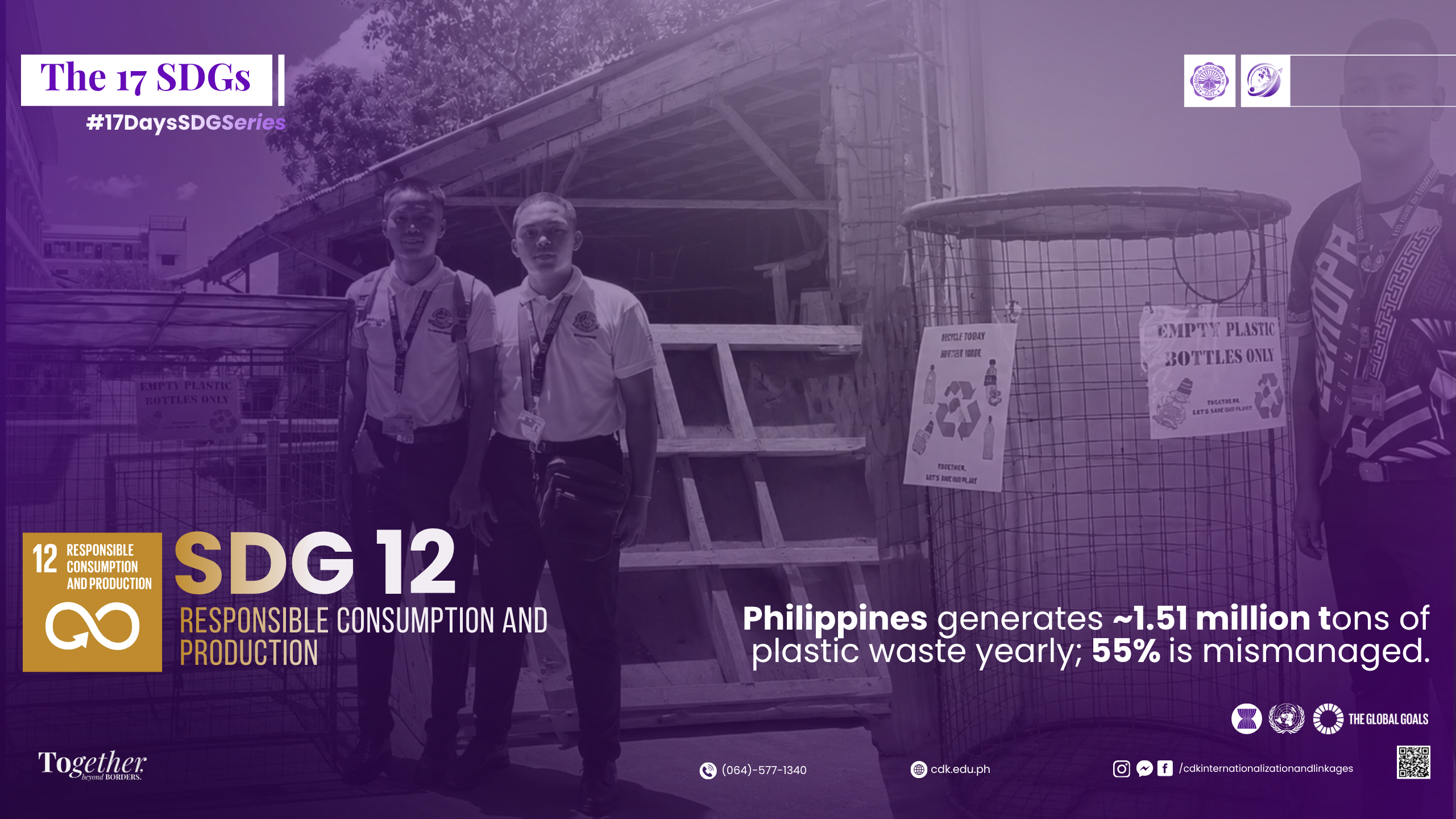
Unsustainable consumption and production drive climate change, biodiversity loss, and pollution. Globally, 1.05 billion tonnes of food were wasted in 2022, equal to 19% of all food available to consumers, with another 13% lost in supply chains from farm to retail. In the Philippines, the plastic crisis is severe. The country generates about 1.51 million tons of plastic waste each year, and over 55% is mismanaged: left uncollected, dumped, burned, or leaked into the environment. Only around 9% is recycled, while 33% ends up in dumpsites and 35% leaks into nature.
While we complain about food we do not like, someone searches through leftovers for their next meal. While we throw away a plastic bag after minutes of use, another family lives among mountains of plastic for years.
Without responsible consumption, resources deplete. Without sustainable production, waste accumulates. With responsible patterns, economies and ecosystems thrive. They are not optional. They are essential. At Colegio de Kidapawan, SDG 12 is not only about recycling. It is about responsibility. Every purchase, every meal, every disposal is a choice. We must choose wisely, not just for ourselves, but for the planet.
What can we do today?
- Reduce food waste and save leftovers
- Avoid single-use plastics. Bring reusable bags and containers
- Recycle properly and support waste diversion programs
- Buy local, sustainable, and ethically produced goods
- Advocate for corporate accountability and extended producer responsibility
What we consume today becomes the world we leave tomorrow.
𝑻𝒐𝒈𝒆𝒕𝒉𝒆𝒓, 𝒃𝒆𝒚𝒐𝒏𝒅 𝒃𝒐𝒓𝒅𝒆𝒓𝒔.
Sources: UN SDG Report 2026 (Goal 12); UNEP Food Waste Index Report 2024; DENR; Earth Action 2025; Inquirer on Philippine plastic waste and recycling