
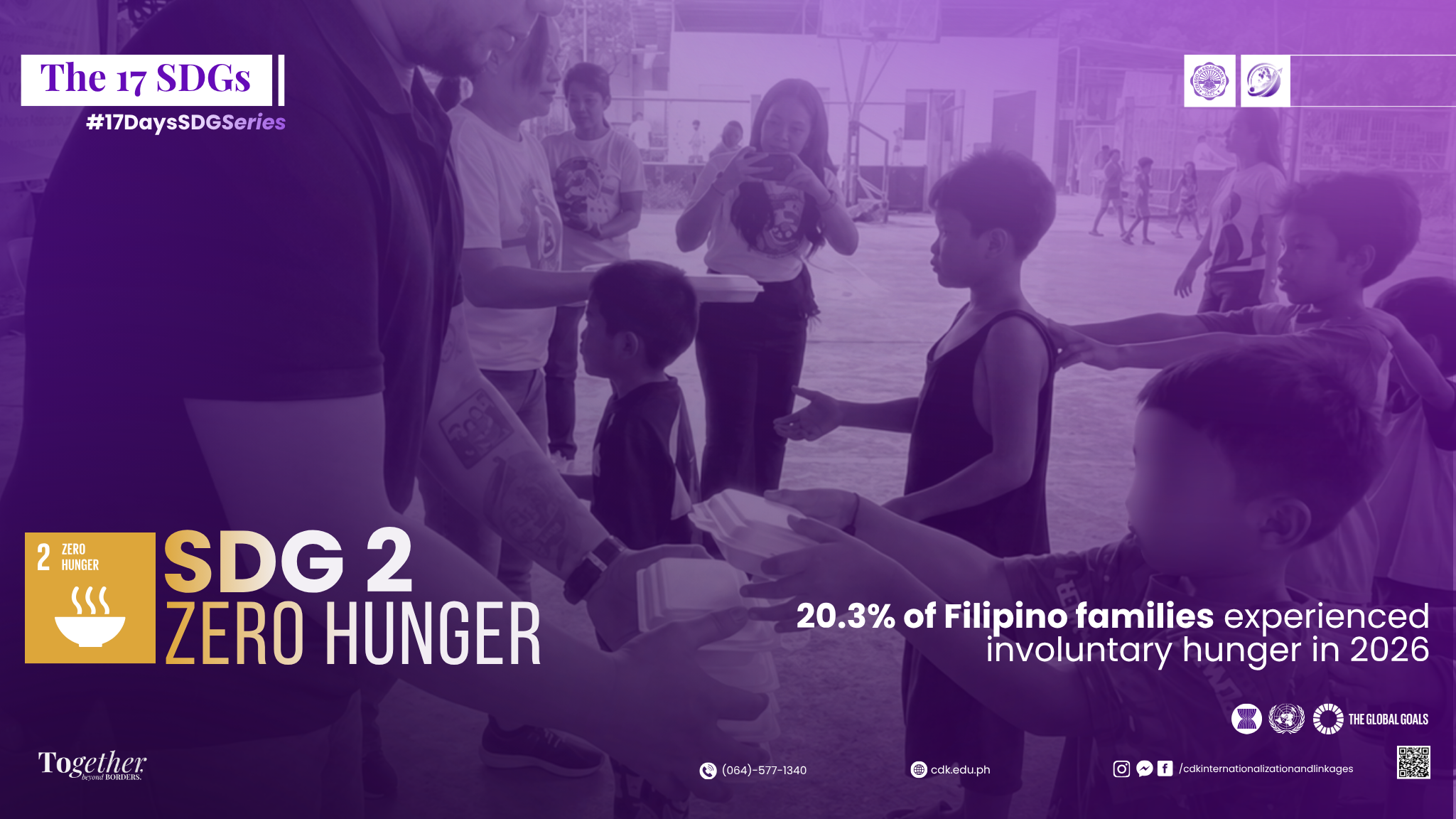
End hunger, achieve food security and improved nutrition, and promote sustainable agriculture.
Think of this: you complain about washing your own dishes without considering being grateful that there is still food on your table, unlike some of our food producers, like farmers, who can produce the food displayed in the market but cannot always provide enough for their own families. Without them, the entire economy would collapse, yet they are among the most affected by hunger.
Hunger is not always visible. Hunger is not always loud. Sometimes it is quiet. It can hide behind every parent who says, “I’m not hungry”, so their child can have the last portion. Sometimes it has a voice that steals a dream and a mind struggling to focus on lessons when the only thought that remains is: When will I eat again? with an empty, aching stomach.
Across the globe, millions still experience food insecurity. The world still produces food, but not enough to solve the problem of hunger. In 2025, an estimated 645 million people worldwide faced hunger—about 1 in every 13 people. Around 2.1 billion people experienced moderate or severe food insecurity. The same is true in the Philippines, where hunger remains painfully real. In the second quarter of 2026, 20.3% of Filipino families (about 1 in 5 families) experienced involuntary hunger at least once in the past three months, according to the Social Weather Stations (SWS) survey. Behind every number is a child, a family, and a future that deserves enough to eat.
Zero Hunger is not only about filling plates. It is about protecting dignity, helping children learn, supporting families, and building a future where no one has to trade their dreams for their next meal.
At Colegio de Kidapawan, Inc., widening its arms together with its mission rooted in quality education and community service becomes more meaningful when we remember that learning cannot flourish on an empty stomach. SDG 2 reminds us that learning and nourishment are inseparable.
What we can do today?
The fight against hunger is not only about food; it is about ensuring that no one should go to bed hungry in a world that has enough. And this starts with us:
• Support local farmers and food producers
• Protect food access for vulnerable families
• Reduce food waste at home and in communities
• Strengthen local feeding and nutrition programs
• Treat every meal as a right, not a privilege
No child should have to choose between learning today and eating today.
𝑻𝒐𝒈𝒆𝒕𝒉𝒆𝒓, 𝒃𝒆𝒚𝒐𝒏𝒅 𝒃𝒐𝒓𝒅𝒆𝒓𝒔.
Sources: FAO, The State of Food Security and Nutrition in the World 2026; Social Weather Stations (SWS) Philippines, 2026 Social Weather Surveys.