
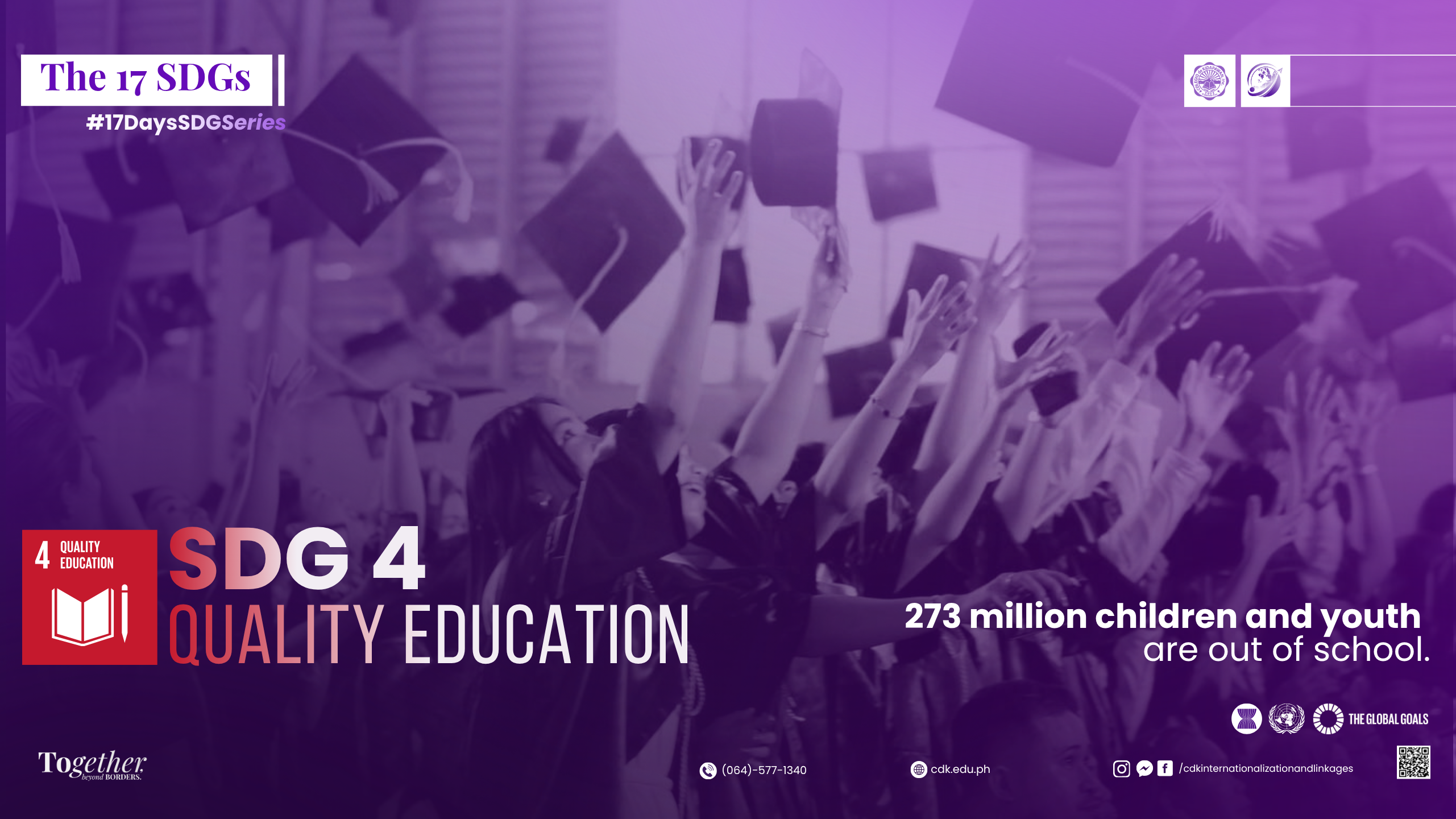
Ensure inclusive and equitable quality education and promote lifelong learning opportunities for all.
In a classroom in the Philippines, a child sits at the back, afraid to raise a hand, not because the lesson is hard, but because every wrong answer makes everyone laugh. In another room, a student walks miles just to reach school, only to find no chairs, limited books, and few resources. Many excellent teachers work abroad because of better opportunities elsewhere. These are not just stories; they are realities in today’s educational landscape.
Education is one of the strongest tools for transformation, yet millions around the world still face barriers to quality learning. For many children, school is still fragile, interrupted by poverty, distance, disability, conflict, or lack of support. Without education, poverty continues. When children cannot learn, families cannot break the cycle of hardship. Without education, inequality is created and deepened. Those without access to quality schooling are left behind in health, income, and opportunity.
Globally, 273 million children and youth were out of school in 2024, about 1 in 6 of all children and young people. This includes 79 million of primary school age, 64 million of lower secondary age, and 130 million of upper secondary age. At the age when they should have completed primary school, only about half of students reach minimum proficiency in reading, and around 40% in mathematics.
Education creates change. In the Philippines, the Department of Education reported progress in learning recovery in School Year 2025–2026, with around 4.5 million learners who began the year as struggling readers successfully improving their proficiency by the end of the school year. Yet challenges remain in ensuring that every learner, especially in vulnerable communities, has access to safe, inclusive, and quality education.
At Colegio de Kidapawan, this goal speaks deeply to identity and mission: “Where quality and relevant education is within everyone’s reach.” A college institution is not only a place that grants degrees; it is a place that shapes service, character, and responsibility. Education becomes powerful when it produces not only skilled graduates, but compassionate citizens. Quality education means learning that is inclusive, relevant, and life-changing. It means teachers who inspire, institutions that care, and communities that invest in the future.
What can we do today?
- Support learners who need help with lessons or materials
- Donate books, supplies, or resources to schools and communities
- Volunteer in tutoring, mentoring, or literacy programs
- Advocate for inclusive, safe, and quality education for all
- Value teachers and respect the learning process
To improve quality of life through quality education.
𝑻𝒐𝒈𝒆𝒕𝒉𝒆𝒓, 𝒃𝒆𝒚𝒐𝒏𝒅 𝒃𝒐𝒓𝒅𝒆𝒓𝒔.
Sources: UNESCO Global Education Monitoring Report 2026; UIS 2026 Education Data Refresh; DepEd Learning Recovery Report, School Year 2025–2026